
International Mobility
A second nationality can widen how a family travels, banks and plans — always subject to destination rules that change.
St. Kitts & Nevis
Citizenship by Investment
Explore a structured pathway to St. Kitts & Nevis citizenship through qualifying investment, due diligence and the official Citizenship Programme.
Private consultation · Confidential process · International advisory
0
Programme established
0
Current investment pathways
US$0k
Published contribution minimum
Confidential Advisory
Compliance-Focused
International Client Service
Private Consultation
Why St. Kitts & Nevis
International mobility, family planning and investment diversification can sit in one legal structure. None of that is a promise of entry, tax outcomes or approval.

A second nationality can widen how a family travels, banks and plans — always subject to destination rules that change.

Eligible dependants may be included where they meet current programme definitions. Eligibility is individual, not assumed.

Official materials describe no mandatory residency period as a condition of the investment route. Interviews and formalities can still apply.

Four published pathways: contribution, public benefit, approved developer real estate and approved private real estate.
Introduced in 1984, it is the world’s first citizenship by investment programme — and one that has been repeatedly reformed.

Citizenship is a legal status, not a holiday. The Federation remains a place of coast, capital and quiet optionality.
St. Kitts & Nevis
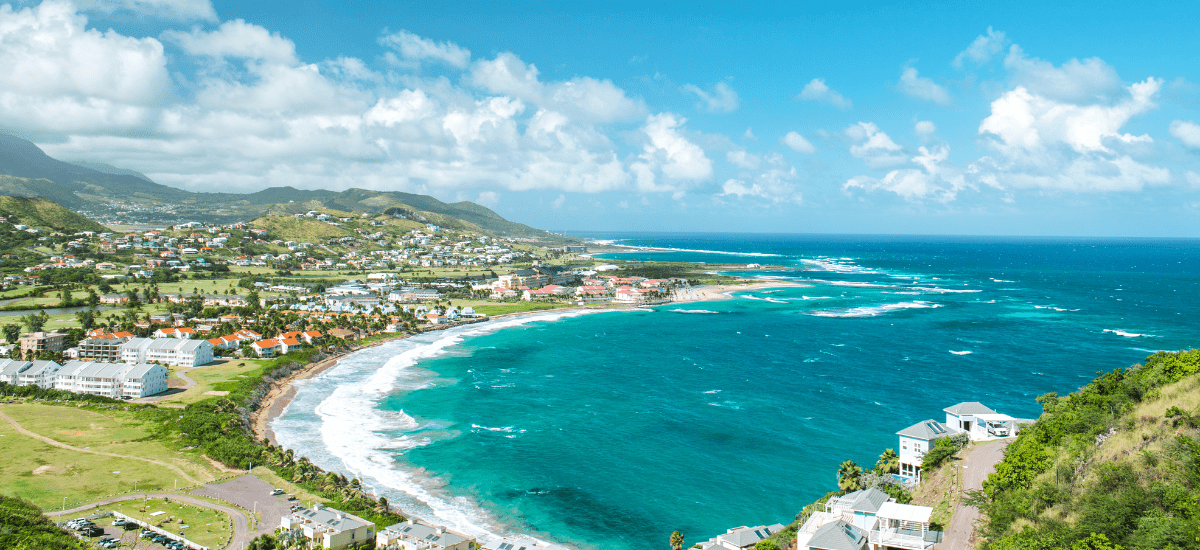
Coast, capital and quiet rooms — the visual register of the Federation, not a tourist brochure.


Citizenship by Investment
The St. Kitts and Nevis Citizenship Programme is administered by the Citizenship by Investment Unit. Applications are filed through an Authorised Agent. Approval depends on eligibility, due diligence and completion of a qualifying investment.
1984
Established
The first citizenship by investment programme.
CIU
Administered by
The Citizenship by Investment Unit of St. Kitts and Nevis.
Agent
Filing route
Applications are submitted through an Authorised Agent.
Federation of
Saint Kittsand Nevis
PASSPORT
Conceptual rendering
Investment options
Four current qualifying routes. Minima, fees and project lists can change. The figures below are drawn from official published materials and held in a central configuration file.
SISC
A non-refundable contribution supporting St. Kitts and Nevis’ sustainable development agenda. Often selected for its clarity and straightforward structure.
US$250,000
Minimum qualifying investment

Developer Real Estate
Purchase a designated unit or share in a government-approved development, such as a resort or residential project, at the published minimum.
US$325,000
Minimum qualifying investment

Private Real Estate
A private real-estate pathway. Official materials distinguish qualifying condominiums from private single-family homes, with a higher minimum for designated homes.
US$600,000
Minimum qualifying investment

Public Benefit
Support an approved public-benefit project through a qualifying contribution paid according to programme rules, with a published minimum of US$250,000.
US$250,000
Minimum qualifying investment
The holding period is measured in years. The coastline is not.
Why investors choose the programme
The useful reasons are structural: a long-running statutory programme, four published routes, and a filing culture that now emphasises interviews and background review.
Four decades of operation, including periods of tightening. History is useful; current rules are decisive.
SISC is a non-refundable contribution with a published family-of-four minimum. It is not an asset, and that simplicity is the point for many families.
Approved developments and private real estate exist for applicants who want a qualifying holding and can accept a holding period.
Interview requirements, independent screening and source-of-funds review are part of the design. That is how a passport keeps its standing.
How the process works
A private advisory conversation is not a government filing. The statutory path runs through an Authorised Agent, due diligence, Approval in Principle, qualifying investment, then citizenship — and only then a passport application.

01
A private discussion of objectives, family composition, timing and the four current investment routes. This is advisory, not a government filing.
02
A structured review of identity, source of funds, dependants and any facts that could affect due diligence. Early candour protects the file.
03
Select among SISC, approved developer real estate, approved private real estate or the Public Benefit Option, based on capital, holding preference and current rules.
04
Assemble civil documents, police certificates, financial evidence and programme forms. Translations and certifications follow the Unit’s standards.
05
The application is submitted through an Authorised Agent. Independent screening and Unit review examine background, identity and source of wealth.
06
If the file is accepted at this stage, the Unit issues Approval in Principle — a conditional decision, not citizenship. Denial or delay for cause may also occur.
07
The contribution or qualifying real-estate purchase, together with remaining government fees, is completed according to the approved route.
08
On grant, a certificate of naturalisation or registration is issued. A St. Kitts and Nevis passport is a separate application after citizenship.
Passport comparison
Caribbean citizenship, European residence and North American immigrant routes are different legal machines. The comparison tool keeps that distinction visible — including the document itself.
Conceptual covers only — not official documents. Informational indicators, not rankings.
Family
Eligible dependants may be included subject to programme rules and eligibility. We do not state universal inclusion, because the law does not.
A legally married spouse may be considered where programme rules allow.
Children may be included if they meet current age and dependency definitions.
Other relatives are not automatic. Definitions are regulatory and change.
Older generations are assessed against the current dependant schedule, not against assumption.
St. Kitts & Nevis · Citizenship by Investment
Due diligence & compliance
The programme is designed to refuse people who should not hold the nationality. We describe that clearly, because it is how serious applicants should want the process to work.

Civil documents, biometrics and identity consistency across jurisdictions.
A coherent account of wealth, from origin to the accounts used for investment.
Independent professional screening commissioned in line with Unit practice.
Certificates from relevant countries of residence, as the file requires.
The Citizenship Unit reviews the file. Convenience is not a criterion.
The main applicant must attend. Dependants aged 16+ may be required to attend.
Misrepresentation is a route to refusal — and, later, to possible deprivation.
FAQ
Citizenship is granted only after eligibility, diligence and investment are completed under official rules.
It is a government-administered legal pathway under which qualifying applicants may be granted citizenship of St. Kitts and Nevis after meeting eligibility standards, completing due diligence, and making a qualifying investment. The programme is administered by the Citizenship by Investment Unit. It is not a visa application, and approval is never guaranteed.

Private consultation
We will not tell you that you are eligible from a website form. We will tell you whether a confidential review is worth your time.